

Hellen and I spent part of last week playing customer. We "secret shopped" some of the biggest auto and home insurance providers in Canada: not stress-testing their systems or looking for edge cases. We just wanted answers to two basic questions: How much does this cost? What's actually covered?
You'd think that would be easy.
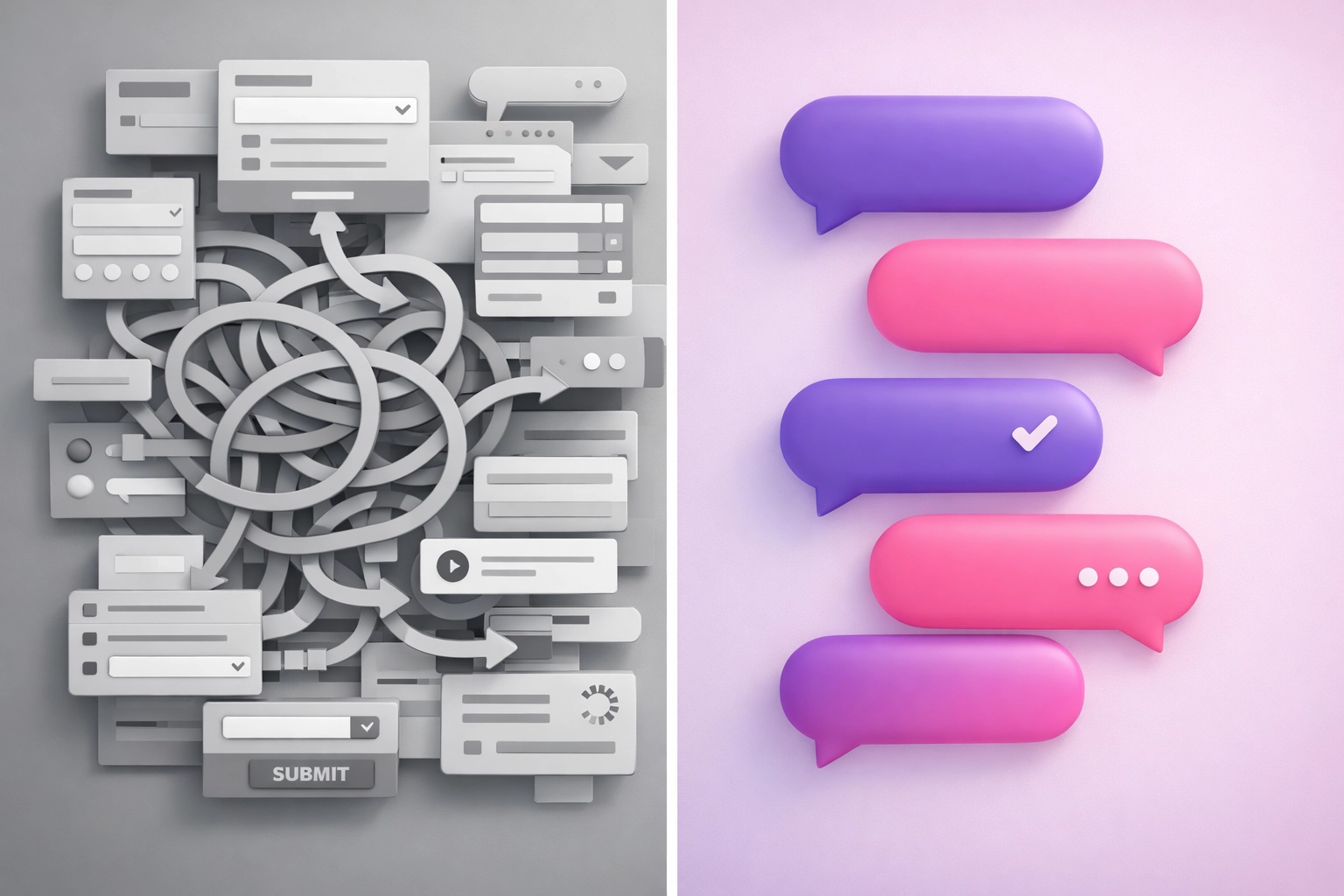
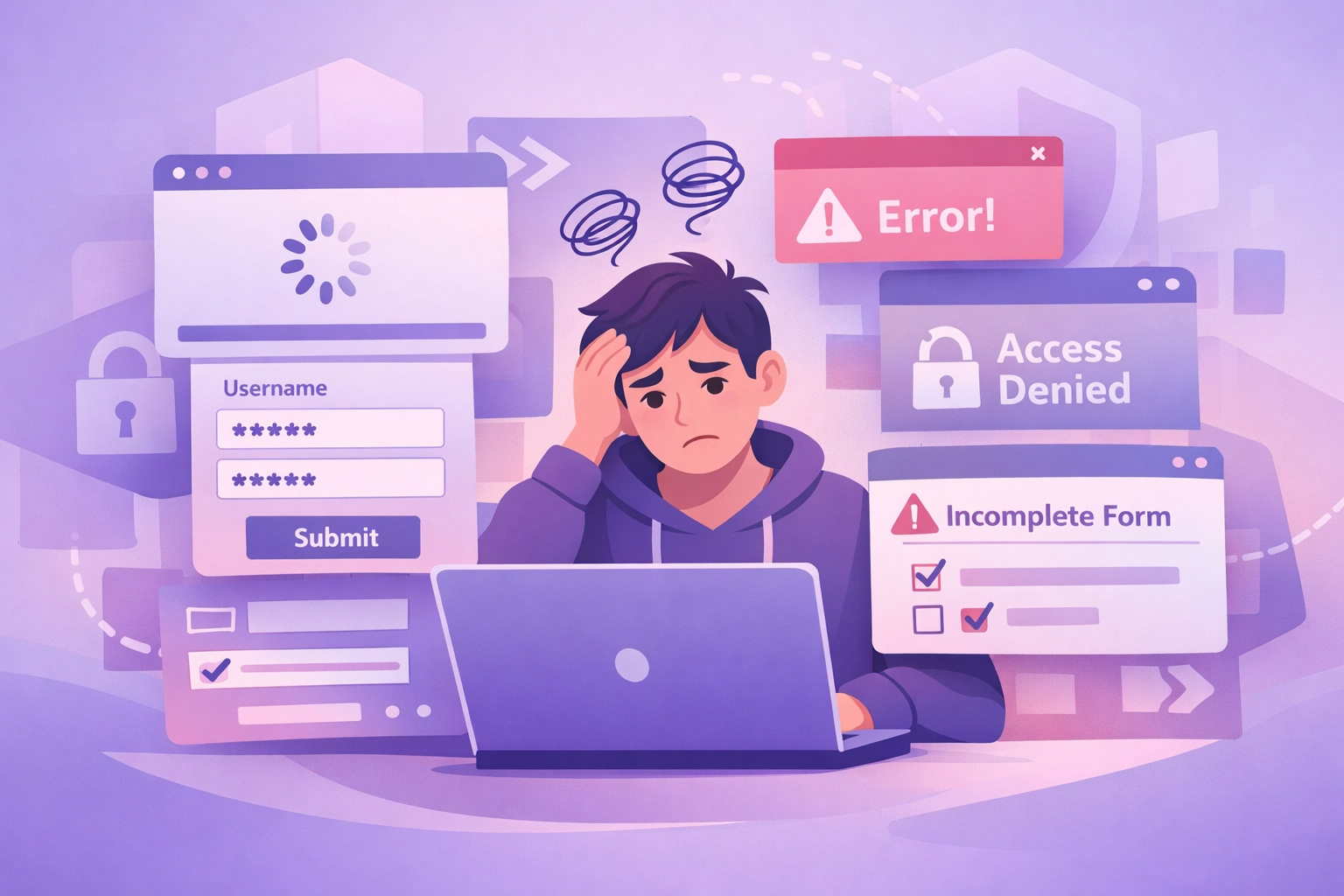
Instead, we hit walls. Lengthy forms asking for information that had nothing to do with our questions. "Contact Us" buttons that led to promises of callbacks in three to five business days. One site required us to create an account before we could see a single coverage detail.
Here's what struck us: these companies have massive budgets and dedicated digital teams. If they're making it this hard, what chance does a growing business with one office manager and a shared inbox have?
The problem isn't effort: it's design
Most business websites were built around what the company needs: lead capture, data collection, routing inquiries to the right department: rather than what the customer is actually trying to do in that moment.
When someone lands on your site, they're already doing work. They're comparing you to competitors, trying to figure out if you can solve their problem, deciding whether they trust you. Every form field, every "we'll get back to you," every extra click adds to their mental load. Some of them will push through. Many won't: and you'll never know they were there.
The traditional solution has been live chat or more staff. Neither scales well when you're running lean. And honestly? Most chatbots just add another layer of frustration: canned responses that miss the point, loops that never reach a human, interfaces that feel like talking to a particularly stubborn FAQ page.
For professional services firms: whether you're in legal, accounting, consulting, or financial advisory: this friction is costing you qualified leads who gave up before you ever knew they existed.
Something's shifting
One site from our experiment stood out: CAA North & East Ontario. They've deployed what's sometimes called a customer-facing AI agent: and the difference was immediate.
No maze of dropdown menus. No generic intake form. We typed a question in plain English, got a clarifying question or two that actually made sense, and received a direct answer. When the situation genuinely needed a human, the handoff was seamless: and the agent had already gathered the relevant context, so we didn't have to start from scratch.
This wasn't a basic chatbot spitting out FAQ links. It felt like talking to a knowledgeable employee who was paying attention.
The technology behind CAA's implementation was developed by Karmaflow AI: a vendor we've worked with and trust. But what made it work wasn't just the tech. It was the design thinking behind it: building for what the customer needs to accomplish, not what the company wants to collect.
What this means for businesses like yours
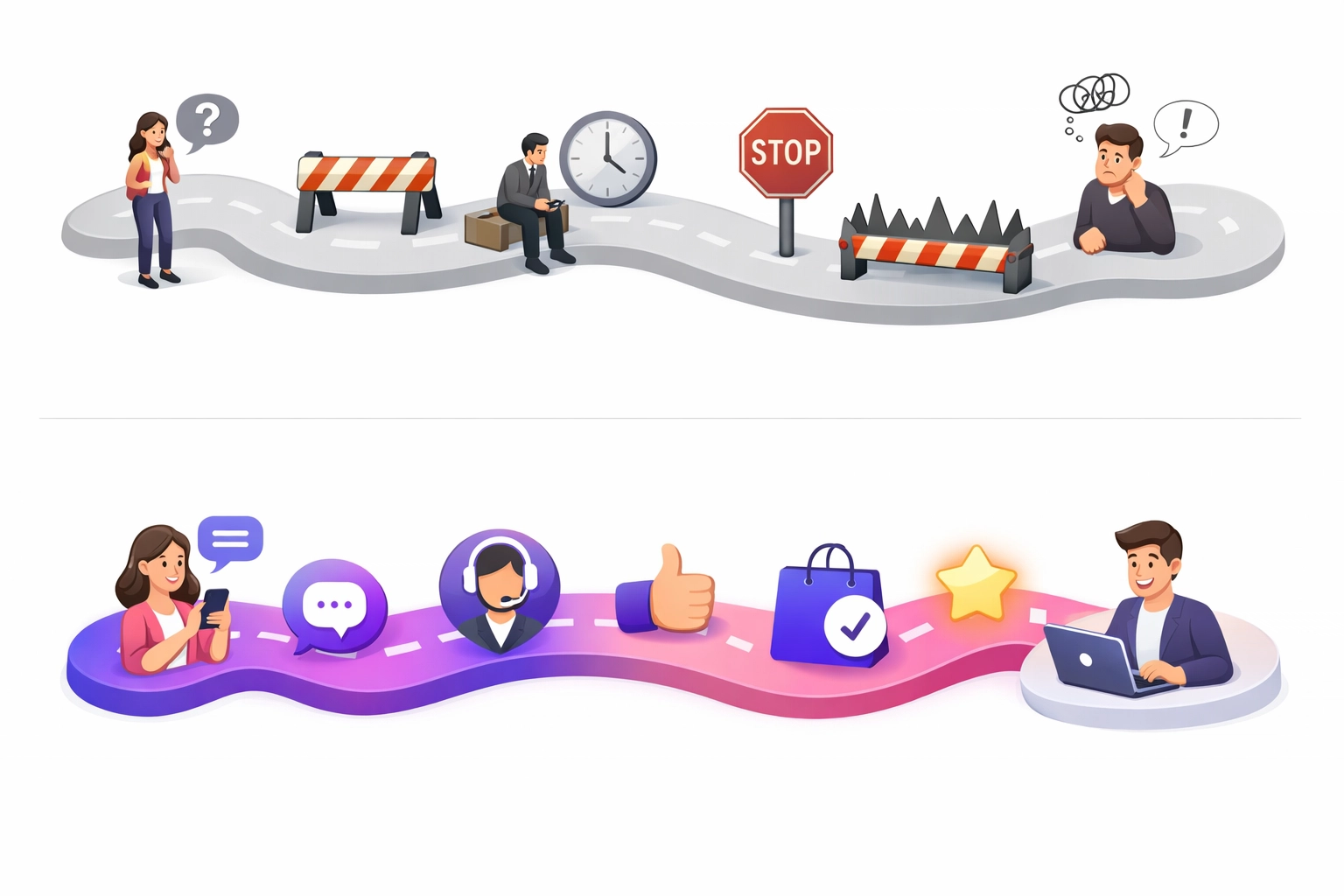
The old model looks something like this: a customer reads vague descriptions on your site, fills out a generic contact form, waits days for a response, then has to re-explain everything when someone finally calls back.
The emerging model flips that: the customer describes their situation in their own words, the AI asks two or three specific questions, provides relevant information immediately, and: when a human is needed: passes along a qualified lead with full context.
Think about what that means for your operations. Your team isn't fielding the same basic questions over and over. They're stepping into conversations where the groundwork is already done. The customer isn't frustrated. Your staff isn't overwhelmed. And you're not losing leads to friction.

The gap between hype and reality
Here's where we need to be honest: not all AI implementation services deliver what they promise. The market is flooded with vendors offering "revolutionary" chatbots that are just dressed-up decision trees. Or platforms so complex they require a dedicated team to manage: which defeats the purpose if you're a lean operation.
The technology to do this well exists today, and it's becoming accessible beyond the enterprise market. The question isn't really whether it works. It's whether it fits your business, your customers, and your operations: and whether the vendors promising these solutions are actually delivering.
This is especially true for professional services. AI consulting isn't just about picking a platform and plugging it in. It's about understanding how your clients actually interact with you, where the friction points are, what questions they're asking before they ever reach out, and what information they need to feel confident moving forward.
A good customer-facing AI agent doesn't just answer questions: it qualifies leads, gathers context, sets expectations, and creates a smoother handoff to your team. A bad one creates more work for everyone and damages trust.
Where LumeH comes in
At LumeH AI, we don't sell software. We sit on your side of the table: helping you cut through the noise, evaluate what's real, and find solutions that actually fit.
When we researched CAA's AI agent as part of our work to benchmark best practices in AI implementation consulting, we weren't shopping for a vendor to promote. We were studying what successful implementation looks like in the real world. That research helps our clients make well-informed decisions by showing them examples of what works: and why.
Our role is to guide you through the questions that matter:
- Where is your current website or customer flow creating unnecessary friction?
- What do your customers actually need when they first reach out to you?
- Which AI for professional services tools can handle your specific use cases: without adding complexity to your operations?
- How do you implement this without disrupting your existing team workflows?
- What does success look like, and how do you measure it?
We work with businesses that are curious about AI but skeptical of the hype. That's probably the right instinct. The goal isn't to automate everything: it's to remove friction where it exists, enhance what your team already does well, and make it easier for customers to work with you.
The conversation is the interface
As we move toward a world where your "interface" is a conversation rather than a menu, the experience shifts from "navigate our system" to "tell us what you need." That's a fundamental change: and it requires thinking differently about how you design customer interactions.
The companies getting this right aren't necessarily the biggest or the most tech-savvy. They're the ones asking better questions: What's making our customers work harder than they should? Where are we losing people before they ever get to talk to us? What would it look like if getting help actually felt helpful?
If those questions sound familiar: if you've watched potential clients bounce from your site because the path to engagement was too complicated: this shift is worth paying attention to.
Let's hear from you
When was the last time a company's website actually felt like it was helping you, rather than making you work for them?
We'd love to hear about your experiences: both the frustrating ones and the surprisingly good ones. Have you encountered an AI agent that actually solved your problem? Or one that made you want to throw your laptop out the window? Drop a comment or send us a message: we're always interested to hear what's working in the real world.
Because at the end of the day, that's what AI implementation should be about: making things easier for the people you're trying to serve. Not harder.