
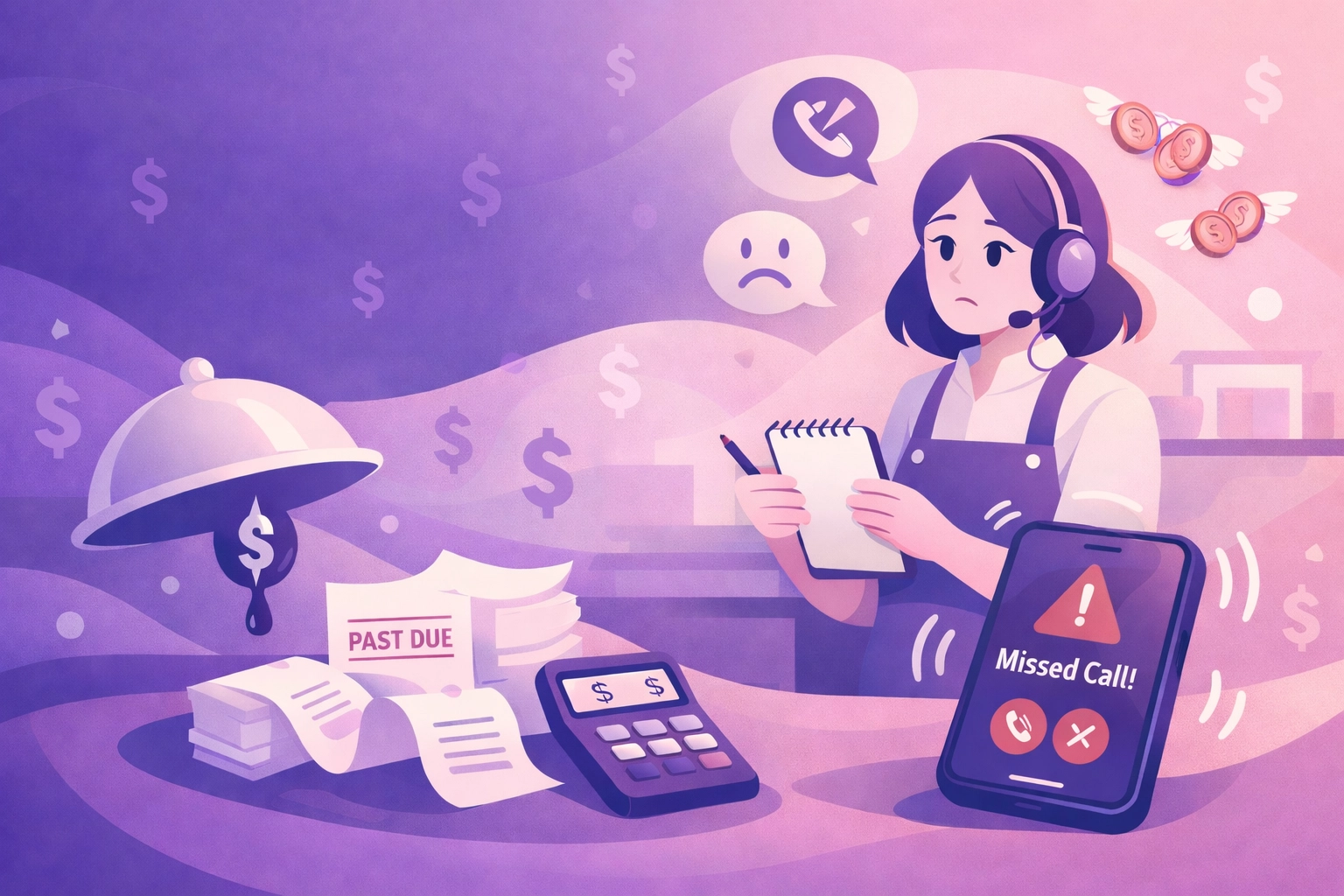
It's 7:15 PM on a Friday night. Your restaurant is packed. Every table is full, servers are moving between the kitchen and dining room, and your host is managing a waitlist that's growing by the minute.
The phone rings.
Then it rings again. And again.
Your host glances at it, trapped between the couple asking about their reservation and three walk-ins waiting at the door. The phone goes to voicemail. That caller? They just dialed your competitor down the street.
This scene plays out in restaurants across the country every single day. And it's quietly draining thousands of dollars from your business: whether you realize it or not.
The Real Cost of a Missed Call
Let's talk numbers. When a potential customer calls your restaurant and no one answers, you don't just lose that moment: you lose the booking, the meal, the drinks, the dessert, and any future visits they might have made.
The average missed call costs a restaurant approximately $1,000 per week. That's $52,000 per year walking out the door: or more accurately, never walking in at all.

Think about your average check size. If it's $75 per table and you miss just three calls per night during your busy periods, that's over $200 in lost revenue daily. Multiply that across a week, then a month, then a year. The numbers add up fast.
But it gets worse. Those missed calls often happen during your busiest times: when you're already making money hand over fist. Friday and Saturday evenings. Sunday brunch. Holiday weeks. These aren't just any customers calling. They're customers ready to spend, ready to book, ready to show up with their friends and family.
And when they can't reach you? They move on. They don't wait. They don't try back later. They call the next restaurant on their list.
The Impossible Choice
Here's the real problem: your staff shouldn't have to choose between the guests in front of them and the guests on the phone. But right now, that's exactly what's happening.
Your host is managing the door, updating the waitlist, coordinating with servers about table turnover, answering questions about the menu, and somehow supposed to catch every phone call that comes in. Your servers are focused on delivering excellent service to their tables: taking orders, checking in on meals, processing payments. Nobody has bandwidth for the phone.
This isn't a training issue. It's not about hiring more staff or working harder. Your team is already stretched thin doing the jobs they were hired to do.
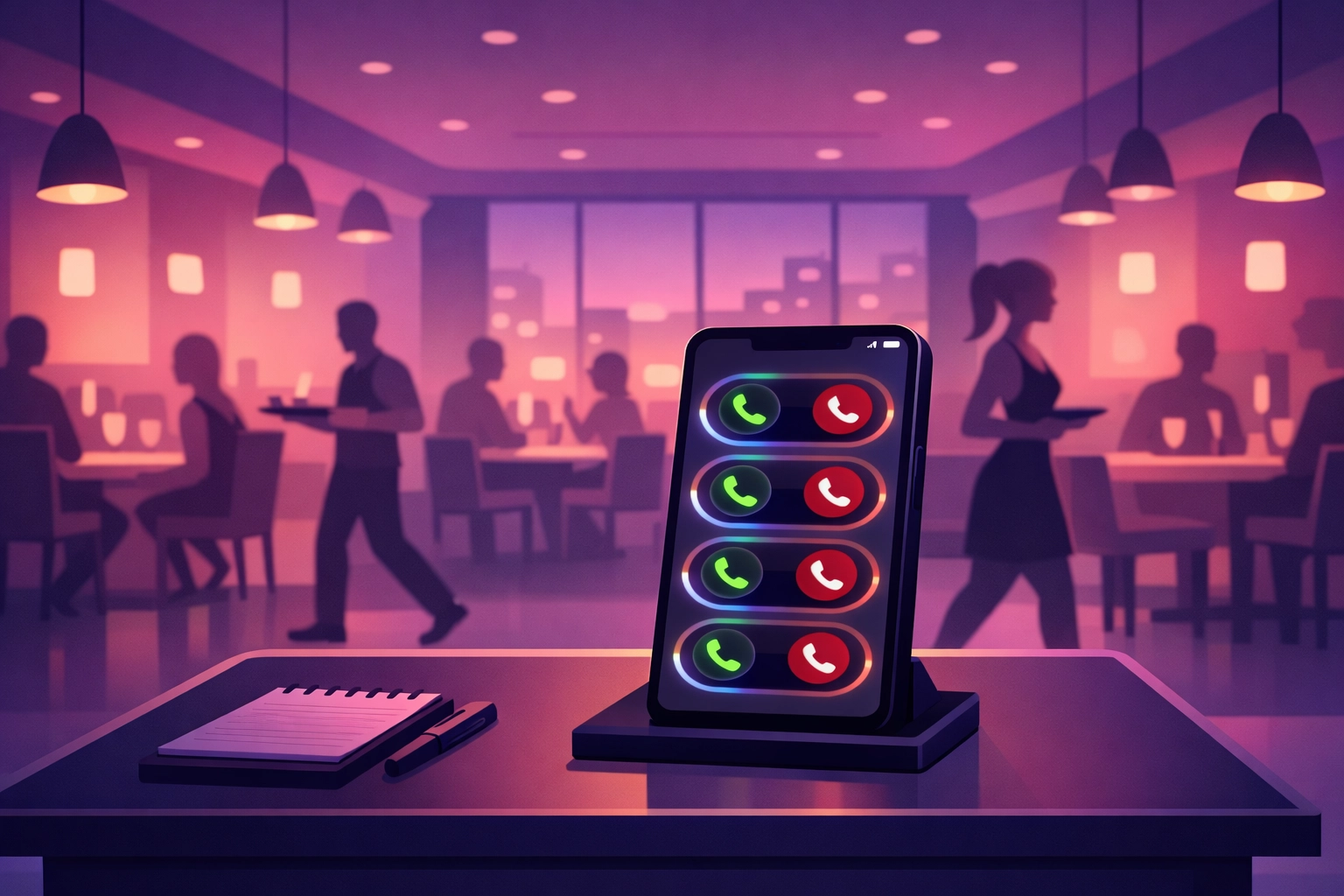
The phone becomes the thing that gets dropped: not because anyone wants to ignore it, but because something has to give when you're operating at capacity.
What Those Missed Calls Actually Cost You
Beyond the immediate revenue loss, missed calls create cascading problems that affect your business in ways that are harder to measure but just as damaging.
Lost repeat business. That customer who couldn't reach you? They just had their first experience with your restaurant: and it was negative. They're less likely to try calling again, less likely to recommend you to friends, and more likely to become a regular somewhere else.
Poor online reviews. Customers who can't reach you take that frustration online. "Called three times and nobody answered." "Impossible to make a reservation." Those reviews stay up, influencing potential customers for months or years.
Missed upselling opportunities. When customers book over the phone, you have the chance to mention your daily specials, suggest larger party accommodations, or offer premium seating options. Voicemail boxes don't upsell.
Operational inefficiencies. Playing phone tag wastes time. When customers do leave messages, someone has to call them back: usually during another busy period. This creates more work and more opportunities for miscommunication.
Restaurants operate on razor-thin margins. Full-service restaurants average only 3-5% profit margins. When you're working with numbers that tight, a $52,000 annual leak isn't just significant: it can be the difference between a profitable year and a struggling one.
The Solution Isn't More Staff
Your first instinct might be to hire someone dedicated to answering phones. But that comes with its own set of problems.
You'd need someone available during all your busy hours: which means scheduling challenges, payroll costs, benefits, training, and coverage when they're sick or on vacation. You're looking at $25,000-$35,000 annually for a part-time position, and that still doesn't guarantee every call gets answered during peak rushes.
The real solution isn't adding more people to an already complex operation. It's giving your existing team the support they need through technology that actually works the way your restaurant operates.

How AI Voice Assistants Work in Practice
AI voice assistants for restaurants handle incoming calls automatically: taking reservations, answering common questions about hours and menu items, and managing booking confirmations. They operate 24/7, never miss a call, and integrate directly with your existing reservation system.
Here's what that looks like in practice:
A customer calls at 7:30 PM on Saturday night. The AI assistant answers immediately, greets them professionally, and asks how it can help. The customer wants to make a reservation for four people next Friday at 7 PM. The assistant checks availability in real-time, confirms the reservation, collects the necessary contact information, and sends an automatic confirmation. The entire interaction takes less than two minutes.
Your host never had to step away from the door. Your servers stayed focused on their tables. And you just booked a four-top for your busiest night of the week.
The technology handles the routine interactions that make up the majority of incoming calls: reservations, hours, location, basic menu questions. When a call requires human judgment or involves a complex situation, it transfers to your team seamlessly.
What This Means for Your Bottom Line
Let's return to those numbers. If missed calls cost your restaurant $52,000 annually, capturing even half of those lost opportunities means $26,000 in recovered revenue. Capture 75%, and you're looking at $39,000.
That revenue comes without adding labor costs, without extending your team beyond their capacity, and without sacrificing the quality of service for guests already in your restaurant.
But the benefits extend beyond immediate bookings. When every call gets answered, your online reviews improve. Your reputation strengthens. Customers feel valued and respected: even before they walk through your door. That goodwill translates to repeat visits, positive word-of-mouth, and a stronger competitive position in your market.
Getting Started
The gap between knowing you're losing money on missed calls and actually fixing the problem comes down to implementation. The technology exists. The return on investment is clear. What matters is finding a solution that fits how your restaurant actually operates: your systems, your workflow, your team.
That's where practical AI implementation makes the difference. Not just plugging in software and hoping it works, but taking the time to understand your specific needs, integrating with your existing tools, and ensuring your team knows how to work alongside the technology.
If you're ready to stop leaving money on the table: or more accurately, in your voicemail box: the solution is more accessible than you might think. The question isn't whether you can afford to implement AI voice assistance. It's whether you can afford to keep missing calls.
Your Friday night rush will still be busy. Your team will still be moving at full speed. But the phone won't be another problem to manage. It'll be another channel bringing customers through your door.
Want to see how AI voice assistants could work in your restaurant? Let's talk about what makes sense for your specific operation: without the hype, the hard sell, or the overwhelm.